One of the first things you realize when you start preserving wedding bouquets is that the flowers that look the most impressive in a bouquet are not necessarily the ones that behave the best in a flower press.
A big garden rose, peony, or ranunculus is beautiful because it has all of those layers and dimension. Unfortunately, those are exactly the things that make a flower harder to press. There’s a lot of moisture packed into a relatively small area, and the center can stay damp long after the outside petals look dry.
Meanwhile, some of the flowers people barely notice in the bouquet—little hydrangea florets, delphinium, baby’s breath, delicate greenery—can end up being some of the prettiest things once everything is pressed.
That doesn’t mean you have to choose your wedding flowers based on what presses well. I definitely wouldn’t plan a bouquet around a flower press. It just helps to know what you’re working with afterward, because different flowers need to be handled differently.
Hydrangeas Are Surprisingly Good Once You Take Them Apart

A whole hydrangea head obviously isn’t going into a flower press, but the individual florets are almost perfect for it.
Once you pull them off the larger cluster, they’re thin, relatively flat, and easy to arrange on the blotting paper. You also get a lot of usable flowers from one hydrangea stem, which is really nice when you’re trying to create a larger framed piece later.
The color can change quite a bit. Pink hydrangeas often dry softer or dustier, blues can become more muted, and white flowers frequently end up cream instead of bright white. I wouldn’t expect an exact color match to the fresh bouquet, but the shape usually preserves really nicely.
Hydrangea is one of those flowers where taking the bouquet apart actually makes you appreciate it more. What looked like one giant bloom is suddenly dozens of little four-petal flowers you can use all over an arrangement.
Delphinium Is One of My Favorites for Wedding Pieces

Delphinium is great because you can take the individual florets off the stalk and press them separately. They’re thin enough that you’re not fighting a huge amount of moisture, and they give you those blue and purple tones that can be harder to find in naturally pressed flowers.
I also like that they don’t have to stay attached to the original stem. Once they’re pressed, you can scatter a few throughout a piece or rebuild a loose stem shape if that works better with the bouquet.
If your wedding flowers include delphinium, I would absolutely save more of it than you think you’ll need.
Baby’s Breath Is Easy, but Don’t Press a Giant Clump
Baby’s breath is one of the easiest wedding flowers to preserve as long as you break it into smaller sprigs first.
A whole dense bunch can trap moisture where all those tiny stems overlap, and there’s really no reason to press it that way anyway. In a finished frame, you’re much more likely to use a little branch here and there.
I usually think of baby’s breath as a filler flower when it’s fresh, but it becomes much more useful once everything is flat. Those tiny white flowers are perfect for filling gaps between larger petals and softening the edges of an arrangement.
The white may dry more ivory or cream, which is normal.
Roses Press Beautifully—Just Not Usually Whole

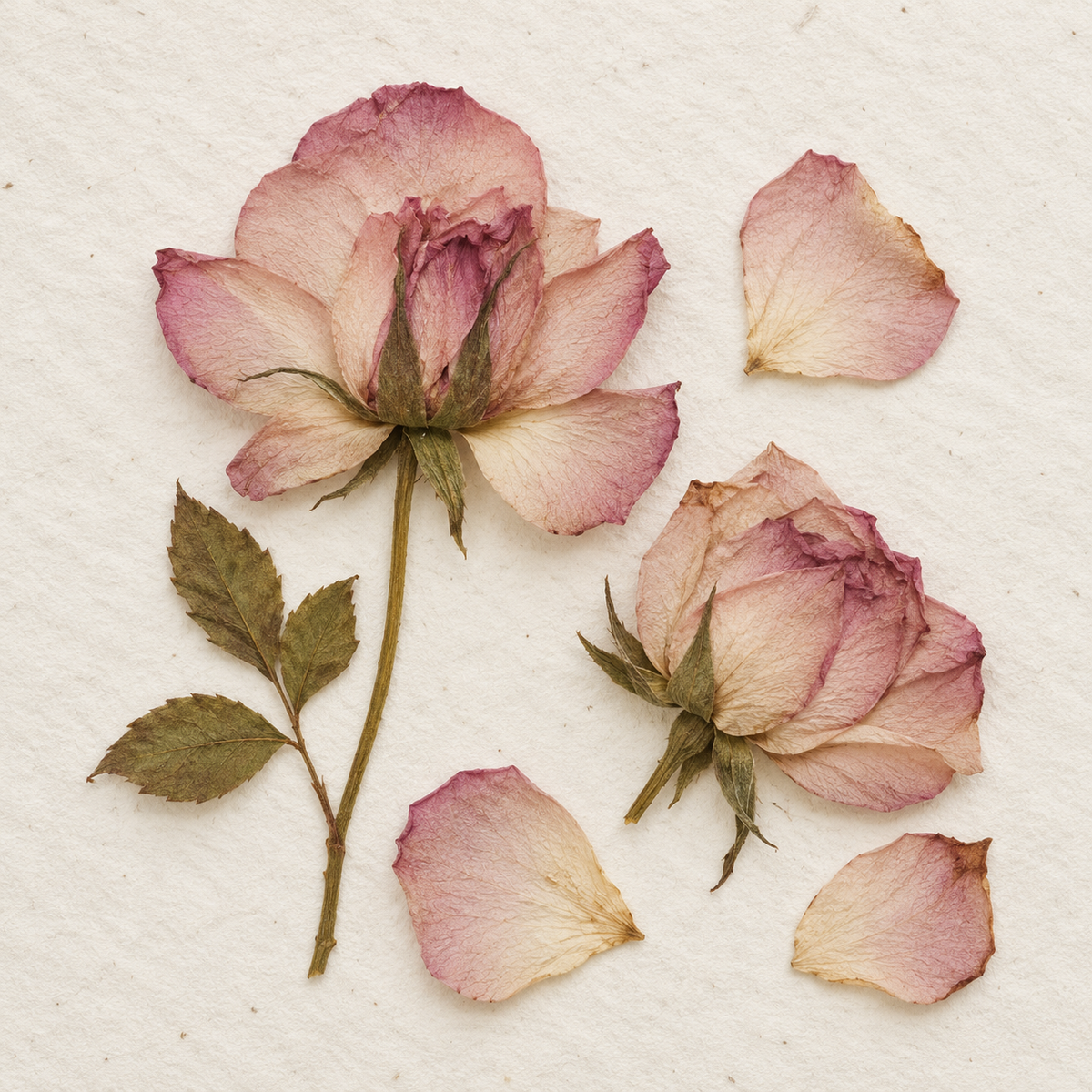
Roses are probably the flower people most want to preserve from a wedding bouquet, and they can be gorgeous pressed. The trick is letting go of the idea that you need to keep the entire rose intact.
A rose has a lot going on in the center. The outer petals are fairly thin, but the petals get tighter and thicker toward the middle, and the base of the flower holds a lot of moisture. Even a smaller rose can flatten enough to make you think it’s going to work whole, while the inside is still much too thick to dry evenly.
I would rather take the rose apart and press the petals individually.
You don’t have to completely lose the look of the rose either. Once the petals are dry, you can overlap several of them again in the finished artwork and suggest the shape of the original bloom. It won’t look like a fresh three-dimensional rose—and it shouldn’t—but it will still read as part of the bouquet.
The other advantage is that you can remove any bruised outer petals and keep the really nice ones underneath.
For darker roses, expect some color shift. Deep reds can become burgundy or very dark, and blush roses often dry into softer, slightly more muted shades.
Ranunculus Can Be Beautiful, but I Would Take It Apart
Ranunculus is one of those flowers that looks manageable because it isn’t enormous, but there are a ridiculous number of petals packed into that little flower.
That tight spiral in the center is beautiful fresh and annoying in a flower press.
I would separate the petals or carefully break the bloom into smaller sections rather than trying to keep the whole flower together. The individual petals are delicate and press nicely, and you can layer a few together later if you want to bring back some of that ranunculus shape.
This is also a flower I would press sooner rather than later. Those thin petals can start bruising and getting translucent-looking as the flower ages.
Peonies Are Worth Saving, but They Are Coming Apart
Peonies are gorgeous pressed, but not as whole flowers.
There is just too much material.
The petals themselves can be fantastic, especially the big outer petals. They give you these large, soft shapes that can become a focal point in a finished arrangement without needing the entire original flower.
If I were preserving a bouquet with peonies, I would take them apart while they’re still fresh and press the petals in several layers rather than trying to force one whole peony into the press.
You get much more usable material that way, and honestly, once you start designing the finished piece, having all of those separate petals is much easier to work with.
Daisies and Similar Flowers Are Usually Pretty Friendly
Daisies and daisy-shaped flowers are generally straightforward because the petals are already thin and spread out.
The center is the only thing I really pay attention to.
Some varieties have a fairly flat center and can go into the press with very little preparation. Others have a thicker, almost raised center that can hold moisture much longer than the petals. If the back feels bulky, I’ll trim some of that thickness away before pressing.
Otherwise, you can end up with petals that are completely dry and a center that still feels slightly soft.
That’s one of those things you don’t notice until you’ve already waited two weeks and think the flower should be done.
Lisianthus Depends on the Flower

Lisianthus is common in wedding bouquets and can press beautifully, but I wouldn’t treat every bloom the same.
A more open lisianthus with fewer layers is much easier to work with than a tightly closed, heavily layered bloom. If it’s fairly flat already, I may press most of the flower together. If it’s thick, I’ll remove some petals and reduce the bulk first.
The petals themselves are delicate and can wrinkle easily, so I take a little extra time arranging them before closing the press. Whatever shape they’re in when you press them is pretty much the shape you’re getting back.
Greenery Is More Important Than You Think
When people think about saving their wedding bouquet, they usually focus on the flowers. I would save plenty of the greenery too.
Eucalyptus, ferns, delicate leaves, and smaller pieces of foliage can completely change the way a finished pressed bouquet looks. Without greenery, a frame can start to feel like a collection of flowers floating next to each other.
Thin greenery generally presses well. Thick, waxy leaves are more unpredictable and can take a lot longer to dry.
With eucalyptus, I usually choose the thinner, flatter leaves and avoid saving every single piece just because it was part of the bouquet. A few good stems are more useful than a stack of bulky leaves I’m never going to use.
Flowers That Are Harder to Press
Some wedding flowers are simply more work.
Garden roses, peonies, tightly layered ranunculus, carnations, chrysanthemums, and dahlias all have a lot of material packed into their centers. Calla lilies and some orchids can also be tricky because the petals are thicker or waxier and may discolor in ways you don’t expect.
That doesn’t mean you can’t preserve them.
It usually means you need to stop thinking about preserving the entire flower and start looking for the parts of it that will actually press well.
That is probably the biggest difference between pressing random flowers from the yard and preserving an actual wedding bouquet. With a meaningful bouquet, there’s a temptation to keep everything exactly as it was.
But sometimes the best way to preserve the flower is to take it apart first.
What I Would Save From a Typical Wedding Bouquet
If I had a bouquet in front of me with roses, hydrangea, baby’s breath, delphinium, and eucalyptus, I wouldn’t try to press equal amounts of everything.
I’d take apart several of the nicest roses and save a range of petals. I’d separate a good amount of hydrangea because those little florets are incredibly useful later. I’d save more baby’s breath than I thought I needed, pull individual delphinium flowers off the stalk, and choose the best eucalyptus pieces instead of pressing every leaf.
That gives you variety without filling the press with material you probably won’t use.
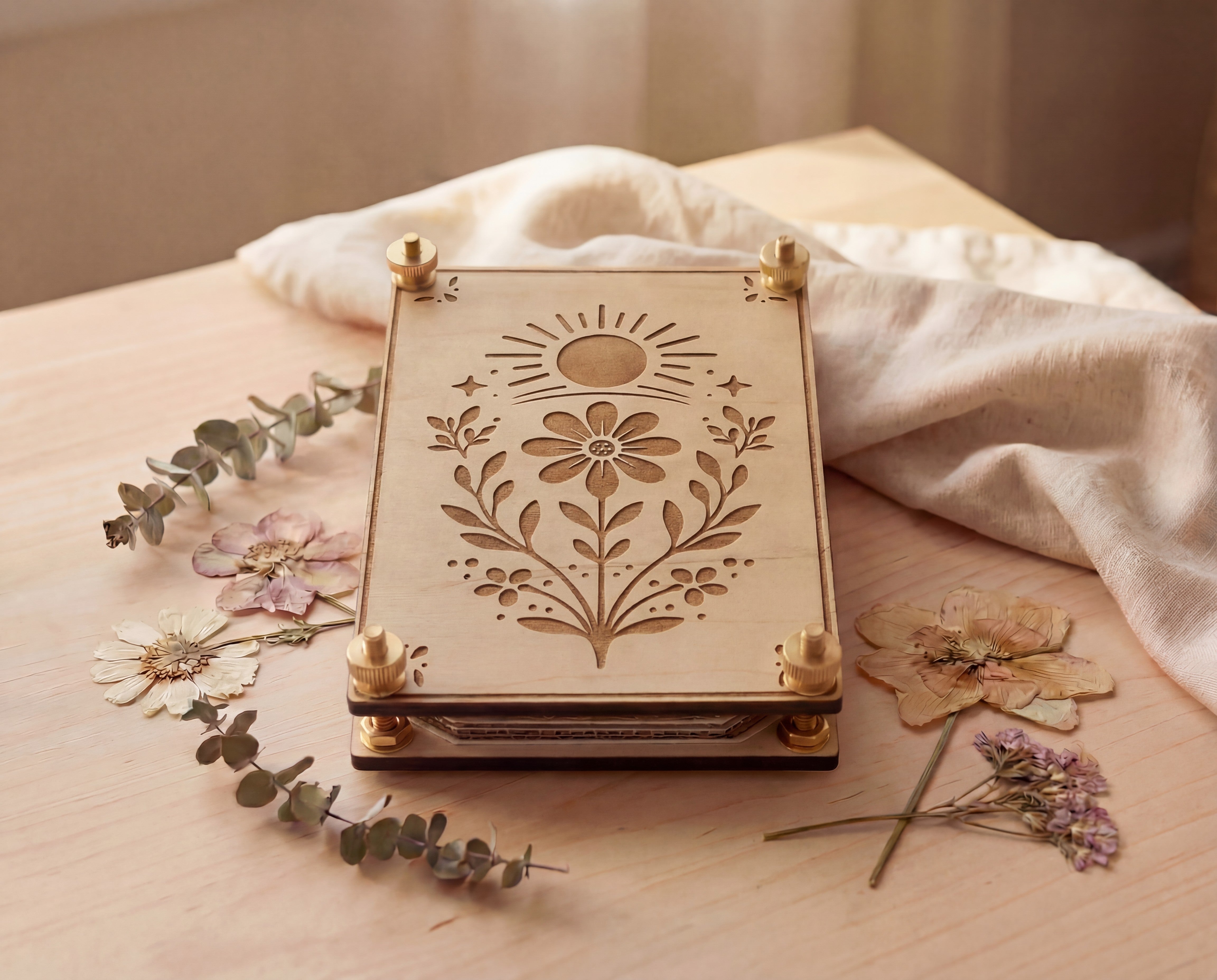
This is also why I like using a traditional press with multiple removable layers for wedding flowers. Bouquets turn into a surprising amount of material once you take them apart, and giving everything enough room matters. These are the maple flower presses I make and use if you’re preserving your bouquet yourself.
You Don’t Need Every Flower to Survive
This is probably worth saying because wedding bouquets feel different from ordinary flowers.
There’s a lot more pressure to get it right.
But your finished piece does not need every flower from the original bouquet. It doesn’t even need every type of flower.
Sometimes you’ll lose a petal. Sometimes a flower will brown more than you expected. Sometimes one hydrangea floret will dry beautifully and the one beside it will look terrible for no obvious reason.
That’s normal.
Save plenty of material, take care of the flowers that matter most, and give yourself options.
When you eventually arrange everything, you may only use a fraction of what you pressed.
So, Which Wedding Flowers Press Best?
If I were choosing purely based on ease, I’d be happiest to see hydrangea florets, delphinium, baby’s breath, delicate greenery, flatter daisy-shaped flowers, and thinner individual petals.
Roses, peonies, and ranunculus are still absolutely worth preserving. They just take more preparation.
The flowers I would worry about most are the ones that are extremely thick, tightly packed, or waxy, because moisture has a harder time escaping from them.
But honestly, almost every bouquet has something worth pressing.
You might go into it thinking the big rose is going to be the star of the finished frame and end up loving the tiny piece of greenery sitting next to it.
That happens more often than you’d think.
Preserving Your Own Wedding Flowers
If you’re planning to preserve your bouquet yourself, you can shop my reusable maple flower presses and wedding flower preservation supplies here. I make them with removable blotting and cardboard layers so you can spread out a full bouquet and replace the paper as the flowers dry.
If your wedding hasn’t happened yet, get your supplies beforehand. Wedding flowers are one of those things that are much easier to deal with when you already have everything ready.
And when you start taking the bouquet apart, don’t worry about making every flower fit.
Save the pieces that are going to press well.
You’ll have a lot more freedom when you put them back together later.